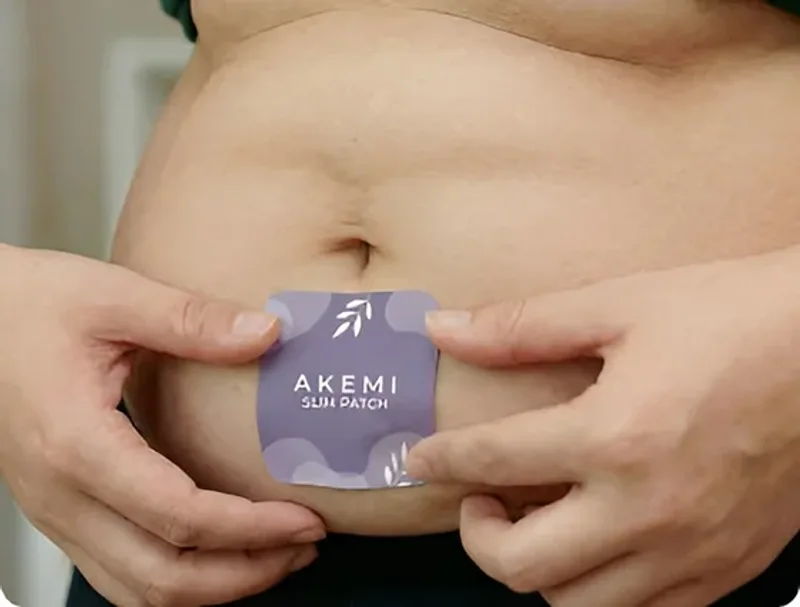
"Bypasses digestion." "Absorbs directly." "No stomach upset." Every patch brand leans on the same three phrases, and none of them explains what actually changes when you deliver something through skin instead of swallowing it.
So let's take both routes apart. There's a real advantage on the transdermal side — and a hard physical limit that decides whether that advantage means anything for your specific product.
What Actually Happens When You Swallow a Supplement?
A capsule doesn't go straight into your bloodstream. It dissolves in your stomach, moves into your small intestine, and gets absorbed through the intestinal wall into a vein called the hepatic portal vein.
That vein has one destination: your liver. Everything you swallow gets processed there before it reaches general circulation. Liver enzymes convert a portion of it into inactive metabolites, and whatever's left continues on to the rest of your body.
Pharmacologists call this the first-pass effect, and it's the single biggest reason the dose on a label isn't the dose in your blood.
How much gets lost varies enormously by compound. For some, it's minor. For others, the liver removes the large majority of the dose before it ever does anything.
What Does "Transdermal" Actually Mean?
Transdermal means the compound crosses your skin and enters the bloodstream directly — no gut, no portal vein, no liver checkpoint on the way in.
That's the genuine advantage, and it isn't marketing. It's why nicotine patches, hormone patches, and motion-sickness patches exist as real, approved medicines.
But your skin isn't a doorway. Its outer layer, the stratum corneum, is a barrier your body built specifically to keep foreign substances out. It does that job well. Getting a molecule through it is the entire engineering challenge of transdermal delivery — and most molecules simply don't make it.
Why Does Molecule Size Decide Everything?
This is the part patch marketing never mentions, and it's the one that determines whether a patch can work at all.
In 2000, dermatologists Jan Bos and Marcus Meinardi published what became known as the 500 Dalton rule. A Dalton is a unit of molecular weight. Their finding: compounds heavier than roughly 500 Daltons don't meaningfully cross intact skin.
Look at what that rule predicts, using molecular weights from the NIH's PubChem database:
| Compound | Molecular weight | Under the 500 Da ceiling? |
|---|---|---|
| Nicotine | 162.2 Da | Yes — proven transdermal drug |
| Caffeine | 194.2 Da | Yes |
| Estradiol | 272.4 Da | Yes — proven transdermal drug |
| Capsaicin (from chili) | 305.4 Da | Yes |
| Curcumin (from turmeric) | 368.4 Da | Yes |
| EGCG (green tea) | 458.4 Da | Just barely |
| Ginsenoside Rb1 (ginseng) | 1,109.3 Da | No — over double the limit |
| Vitamin B12 (cyanocobalamin) | 1,355.4 Da | No — nearly triple the limit |
Notice what this does and doesn't say. Some plant compounds are small enough to be plausible candidates. Others aren't close. "It's herbal, so it absorbs through skin" isn't a claim — it's a coin flip that depends on the specific molecule.
And vitamin B12 deserves a flag of its own. B12 patches are one of the best-selling categories in the whole market, and cyanocobalamin is nearly three times the ceiling for skin penetration.
Size also isn't the only barrier. A molecule needs the right fat-solubility to move through skin's lipid layers, and it needs a concentration high enough to push a useful dose across in the hours you're wearing it. Passing the 500 Dalton test is the minimum, not a guarantee.
So Is Transdermal Better Than Oral?
Neither route wins in the abstract. The honest answer is that it depends entirely on the molecule.
| Oral | Transdermal | |
|---|---|---|
| Liver first-pass | Yes — part of the dose is lost | No — enters circulation directly |
| Molecule size limit | No hard ceiling | Roughly 500 Daltons |
| Dose control | Precise, measured per capsule | Varies by skin, site, heat, sweat |
| Legal status as a supplement | Recognized under US law | Not recognized — see below |
| Research base | Extensive | Strong for a handful of drugs, thin for supplements |
For nicotine, transdermal is genuinely superior — small molecule, heavy first-pass loss when swallowed, decades of trials. For vitamin B12, the same route is close to pointless on the physics alone. Same technology, opposite verdicts, because the molecule changed.
If you're weighing an actual purchase rather than the science, we compared the two categories head to head in weight loss patch vs. weight loss pills.
Why Can't a Patch Legally Be Called a Dietary Supplement?
Here's the part almost no one in this industry will tell you, and it applies to every patch on the market — including the one we recommend on this site.
The Dietary Supplement Health and Education Act of 1994 (DSHEA) is the law that defines what a dietary supplement is in the United States. Its definition contains a requirement that most shoppers have never heard: a dietary supplement must be intended for ingestion. Swallowed. Tablet, capsule, powder, softgel, gelcap, or liquid.
A patch isn't swallowed. So by the plain text of the statute, a transdermal patch cannot be a dietary supplement — regardless of what's in it.
This isn't a technicality nobody enforces or notices. It reached the pharmacy literature this year.
What this means in practice: the patch category sits in a regulatory gap. No agency reviewed the claims. No one verified the ingredient list. There's no approval standing behind any of it — and the "dietary supplement" label on the box doesn't have the legal meaning buyers assume it does.
What Does This Mean for You as a Buyer?
It means the usual trust signals aren't available here, so you need different ones. Three questions do most of the work:
- Is every ingredient and amount published? A hidden "proprietary blend" means you can't check a single molecular weight yourself. Full disclosure is the minimum entry requirement — see which ingredients are worth looking for.
- Can you get your money back, easily? With no regulatory verification available, the refund window is the only real protection you have. Read the actual terms, not the badge.
- Does the brand claim more than it can support? Any patch promising to "melt fat" or match a prescription drug is telling you how much it respects the evidence.
And keep the expectations calibrated. A patch is a delivery method, not a weight-loss mechanism — how weight loss patches work covers what the ingredients are actually supposed to do once they're in, and our realistic timeline covers when to judge results.
Akemi Slim Patch: Full Ingredient List, 30-Day Window
We'll be straight with you: no patch on the market — this one included — is a legally recognized dietary supplement, and none has FDA verification behind its claims. That's precisely why the only filters worth applying are a fully published ingredient list and a refund window you can actually use. Akemi Slim discloses all 11 herbs and gives you 30 days to decide.
Finally — if you're taking oral supplements for a diagnosed deficiency, don't swap them for a patch on the strength of a product page. That's a conversation for your doctor, and our safety guide covers the situations where a patch isn't the right call at all. New to the topic? Start with the complete weight loss patches guide.
Frequently Asked Questions
Is transdermal absorption better than oral?
Neither route is better in the abstract — it depends entirely on the molecule. Transdermal delivery skips the liver's first-pass metabolism, which is a real advantage. But only compounds under roughly 500 Daltons cross skin in meaningful amounts, so a route that works beautifully for nicotine can deliver almost nothing for a larger molecule.
Do vitamin patches actually work?
It depends on the vitamin's molecular weight. Vitamin B12 as cyanocobalamin weighs about 1,355 Daltons — nearly three times the 500-Dalton ceiling for skin penetration. Smaller compounds have a better case. Ask any patch brand for absorption data on their specific ingredients, not on patches in general.
Are weight loss patches FDA approved?
No. And there is a further problem most brands do not mention: under US law a dietary supplement must be intended for ingestion, so a patch cannot legally be sold as a dietary supplement at all. The FDA states that topical products are not supplements.
Should I stop taking oral supplements and switch to patches?
There is no good evidence to support that swap. Oral supplements lose part of the dose to liver metabolism, but they are the legally recognized, better-studied route. If you are treating a diagnosed deficiency, that is a conversation for your doctor, not a decision to make from a product page.

Rachel Monroe
Rachel researches weight-management products and translates the marketing and the science into plain, honest guidance. She is not a doctor, dietitian, or medical professional, and this article is not medical advice.