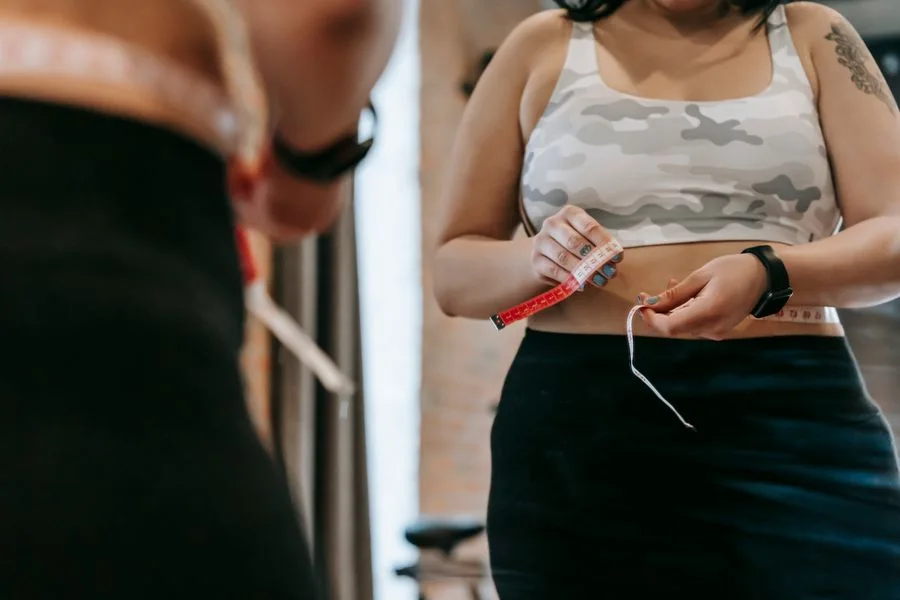
What Exactly Is a Weight Loss Patch?
A weight loss patch is a small adhesive patch, usually worn on the belly, arm, or foot, that's designed to release ingredients slowly through the skin over 24 to 48 hours. The pitch is simple: no pills to swallow, no shakes to mix, just peel, stick, and go about your day.
Most patches on the market use plant-based ingredient blends, ranging from a handful of herbs to a dozen or more, often drawing on traditional herbal medicine rather than clinically isolated compounds.
How Common Is the Struggle With Weight in the U.S.?
It's worth naming the scale of the problem these products are trying to solve.
How Are Weight Loss Patches Supposed to Work?

A transdermal patch applied near the belly button, the most common placement.
The theory behind most patches is "transdermal delivery": instead of swallowing a capsule that has to survive digestion, the ingredients are absorbed directly through the skin into the bloodstream, in theory providing a steadier release throughout the day.
We go much deeper into the mechanism, and what actually limits it, in our full breakdown: How Do Weight Loss Patches Work? The Science Explained.
Do Weight Loss Patches Actually Work?
Here's the honest, unglamorous answer: the science on skin absorption is a real limiting factor, and it applies to weight loss patches too.
That doesn't mean patches are worthless. It means the honest expectation is "small support tool," not "solution on its own." Most people who report good experiences pair the patch with better eating habits and more movement, and the patch functions more as a daily ritual and reminder than as the mechanism doing the heavy lifting.
An Example Worth Looking At: Akemi Slim Patch
If you want a patch that at least discloses its formula, Akemi Slim Patch is built on a plant-based blend of 11 traditional herbs, backed by a 30-day money-back guarantee. We wrote a full independent review covering the ingredients, real pricing, and who it's a good fit for.
What Ingredients Do Weight Loss Patches Usually Contain?
Formulas vary widely by brand, but common ingredients across the category include:
- Warming spices like cinnamon, ginger, and cardamom, traditionally linked to digestion and metabolism
- Herbal tonics like astragalus and licorice root, used in traditional herbal medicine for energy and digestive support
- Bitter herbs like wormwood, used traditionally to support digestion
- Fruit and root extracts like longan and white peony root, common in traditional herbal blends
The single most important thing to check before buying any patch: does the brand actually publish its ingredient list? A surprising number don't, which should be a dealbreaker regardless of the marketing.
Are Weight Loss Patches Safe to Use?
For most healthy adults, a well-made patch with disclosed ingredients is low-risk, but "low-risk" isn't the same as "risk-free." We cover this in detail, including who should be extra cautious, in Are Weight Loss Patches Safe? Side Effects and What to Know.
How Do You Choose a Good Weight Loss Patch?

Whatever patch you choose, it works best alongside real food habits, not instead of them.
A few practical filters that cut through the marketing noise:
- Ingredient transparency. If a brand won't tell you what's in it, walk away.
- A real guarantee. A 30-day (or longer) money-back guarantee means you can try it with less financial risk.
- Realistic marketing. Be wary of promises of dramatic, fast results with zero effort. That's a sign of hype, not confidence in the product.
- Independent reviews. Look for reviews that mention both pros and cons, not just five-star praise.
Weight Loss Patches vs. Pills: Which Should You Try First?
Neither format is inherently superior. Pills allow for more precisely dosed, well-studied ingredients (since oral supplements aren't limited by the skin's absorption barrier), while patches win on convenience and consistency, since there's no capsule to forget. If you've struggled to stay consistent with a pill routine, the "set it and forget it" nature of a patch might be the more realistic choice for you, even if the ingredient delivery itself is less proven. We break the two formats down line by line in patch vs. pills: which is better?, and if you're wondering about timing, see how long patches take to work.
Frequently Asked Questions
Do weight loss patches really work?
The evidence is limited. Patches may offer mild support for appetite and routine when paired with diet and movement, but there's no strong clinical proof that a patch alone causes significant weight loss.
How long should I use a weight loss patch before judging results?
Most brands suggest at least 3 to 4 weeks of consistent daily use before evaluating whether it's helping, since gradual habit changes take time to show.
Can I wear a weight loss patch every day?
Most patches are designed for daily wear with rotation of the application site, but check the specific product's instructions and stop if you notice skin irritation.
Are weight loss patches regulated by the FDA?
Most weight loss patches are sold as cosmetic or wellness products, not FDA-approved drugs, so they are not held to the same testing standard as medications.
Keep Reading: The Full Patch Series

How Do Weight Loss Patches Work?

Are Weight Loss Patches Safe?

Patch vs. Pills: Which Is Better?
How Long Until You See Results?

Rachel Monroe
Rachel researches weight-management products and translates the marketing and the science into plain, honest guidance. She is not a doctor, dietitian, or medical professional, and this article is not medical advice. Talk to a licensed healthcare provider before starting any new weight-loss product, especially if you're pregnant, nursing, or managing a health condition.